Understanding Your Audiogram A Simple Guide
Learn to interpret your audiogram results. This guide explains what the symbols and lines mean, helping you understand your hearing loss better.
Understanding Your Audiogram A Simple Guide
Learn to interpret your audiogram results. This guide explains what the symbols and lines mean, helping you understand your hearing loss better.
So, you've just had a hearing test, and your audiologist handed you a piece of paper covered in lines, symbols, and numbers. It might look like a complex chart, almost like a secret code, but don't worry! That piece of paper is your audiogram, and it's actually a very straightforward and incredibly important map of your hearing. Understanding your audiogram is the first crucial step in understanding your hearing health and making informed decisions about potential hearing solutions, like hearing aids. This comprehensive guide will break down everything you need to know about your audiogram, from the basic symbols to what your results mean for your daily life and how different hearing aids can address your specific needs.
What is an Audiogram Decoding Your Hearing Map
An audiogram is a graph that shows the softest sounds you can hear at different pitches or frequencies. It's essentially a visual representation of your hearing sensitivity. During a hearing test, an audiologist plays various tones into your ears through headphones, and you indicate when you hear them. The results are then plotted on this graph. Think of it as a detailed report card for your ears, showing where your hearing is strong and where it might need a little help.
The Axes of Your Audiogram Understanding Frequency and Loudness
Let's start by looking at the two main axes of the audiogram:
Frequency Pitch on the Horizontal Axis
The horizontal axis (x-axis) represents frequency, measured in Hertz (Hz). Frequency is what we perceive as pitch. Low frequencies are low-pitched sounds, like a bass drum or a deep voice. High frequencies are high-pitched sounds, like a bird chirping, a child's voice, or the 's' and 'f' sounds in speech. The frequencies typically tested range from 250 Hz (low pitch) to 8000 Hz (high pitch). Most human speech falls within the 500 Hz to 4000 Hz range, which is why these frequencies are particularly important for understanding conversations.
Loudness Intensity on the Vertical Axis
The vertical axis (y-axis) represents loudness or intensity, measured in decibels (dB HL - Hearing Level). The higher up on the graph, the softer the sound. As you move down the graph, the sounds get louder. For example, 0-20 dB HL is considered normal hearing, while 90 dB HL and above indicates profound hearing loss. The numbers on this axis tell us how loud a sound needs to be before you can just barely hear it. The lower the number, the better your hearing at that specific frequency.
The Symbols and Lines Decoding Your Hearing Thresholds
Now, let's talk about those mysterious symbols and lines. Each ear is tested separately, and different symbols are used to distinguish between them:
- Right Ear: Typically represented by red circles (O) for air conduction and red carets (>) or brackets (]) for bone conduction.
- Left Ear: Typically represented by blue X's (X) for air conduction and blue carets (<) or brackets ([) for bone conduction.
These symbols are plotted at the intersection of frequency and loudness, indicating your hearing threshold – the softest sound you can hear at that particular frequency.
Air Conduction Testing How Sound Travels Through Your Ear Canal
Air conduction tests how well sound travels through your outer ear, middle ear, and inner ear. This is the most common way we hear sounds in daily life. The circles (right ear) and X's (left ear) represent your air conduction thresholds. If these symbols are plotted lower down on the graph (meaning higher decibel levels), it indicates that you need sounds to be louder to hear them, suggesting hearing loss.
Bone Conduction Testing Inner Ear Function
Bone conduction tests how well sound travels directly to your inner ear, bypassing the outer and middle ear. This is done by placing a vibrator on the bone behind your ear. The carets or brackets represent your bone conduction thresholds. Comparing air conduction and bone conduction results helps your audiologist determine the type of hearing loss you have:
- Sensorineural Hearing Loss: If both air and bone conduction thresholds are similar and show hearing loss, it means the problem lies in your inner ear (cochlea) or the auditory nerve. This is the most common type of permanent hearing loss.
- Conductive Hearing Loss: If bone conduction thresholds are normal, but air conduction thresholds show hearing loss, it indicates a problem in your outer or middle ear (e.g., earwax blockage, fluid in the middle ear, eardrum perforation). This type of hearing loss is often temporary and medically treatable.
- Mixed Hearing Loss: If both air and bone conduction show hearing loss, but air conduction is worse than bone conduction, it's a combination of sensorineural and conductive hearing loss.
Degrees of Hearing Loss Interpreting the Severity
The audiogram also helps classify the degree of your hearing loss based on the average of your hearing thresholds across key frequencies. Here's a general breakdown:
- Normal Hearing (0-25 dB HL): You can hear most sounds without difficulty.
- Mild Hearing Loss (26-40 dB HL): You might struggle to hear soft speech or speech in noisy environments.
- Moderate Hearing Loss (41-55 dB HL): You'll likely miss a significant portion of normal conversation, especially without visual cues.
- Moderately Severe Hearing Loss (56-70 dB HL): Most conversational speech will be difficult to hear without amplification.
- Severe Hearing Loss (71-90 dB HL): You'll only hear very loud sounds and will rely heavily on amplification and/or visual cues.
- Profound Hearing Loss (91+ dB HL): You'll hear extremely loud sounds, if any, and will depend on powerful amplification or other assistive devices.
Understanding Your Hearing Loss Shape The Audiogram Configuration
The 'shape' or configuration of your audiogram lines can tell your audiologist a lot about the nature of your hearing loss. Here are some common configurations:
- Flat: Hearing loss is roughly the same across all frequencies.
- Sloping: Hearing is better in the low frequencies and gets progressively worse in the high frequencies. This is very common with age-related hearing loss (presbycusis) and noise-induced hearing loss, making it hard to hear 's', 'f', 'th' sounds.
- Rising: Hearing is worse in the low frequencies and gets better in the high frequencies. Less common, but can be associated with certain medical conditions.
- Notch: A dip in hearing sensitivity at a specific frequency, often around 4000 Hz, which is characteristic of noise-induced hearing loss.
- Cookie Bite (U-shaped): Hearing is better in the low and high frequencies, but worse in the mid-frequencies. Often genetic.
Speech Audiometry Beyond Pure Tones
While pure tone audiometry (what we've discussed so far) measures your ability to hear sounds, speech audiometry measures your ability to understand speech. This is often a more practical indicator of how hearing loss affects your daily life. Key measurements include:
- Speech Recognition Threshold (SRT): The softest level at which you can correctly repeat 50% of spoken words.
- Word Recognition Score (WRS): Your ability to correctly repeat single-syllable words presented at a comfortable listening level. This score is given as a percentage and is a crucial indicator of how much benefit you might get from hearing aids. A low WRS, even with amplification, suggests difficulty understanding speech.
What Your Audiogram Means For Hearing Aids Tailoring Solutions
Your audiogram is the blueprint for your hearing aid prescription. It tells your audiologist exactly how much amplification you need at each specific frequency to bring sounds back to a comfortable and audible level. It also helps determine the type, style, and features of hearing aids that would be most beneficial for you.
Mild Hearing Loss Discreet and Advanced Options
For mild hearing loss, where your audiogram shows thresholds between 26-40 dB HL, you might notice difficulty in noisy environments or with soft speech. Hearing aids for this degree of loss are often very discreet, focusing on clarity and natural sound. Many modern devices offer advanced features like noise reduction and directional microphones to enhance speech understanding in challenging situations.
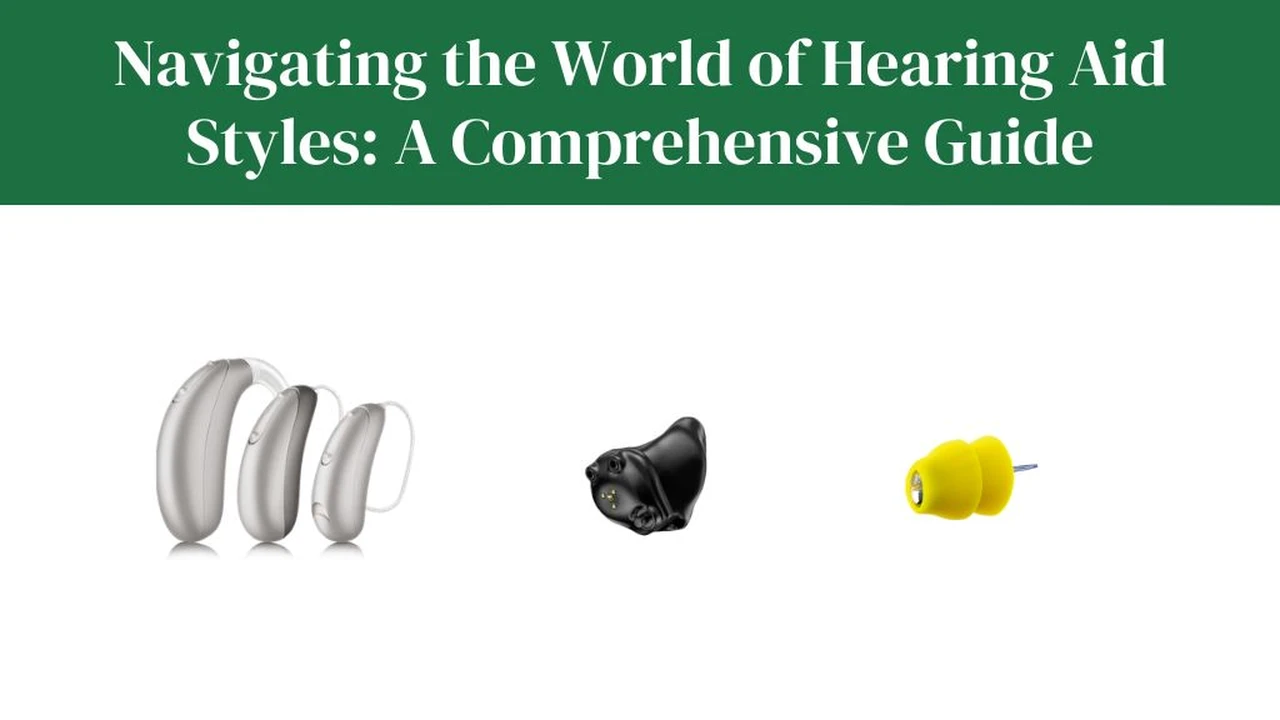
- Recommended Styles: Completely-in-Canal (CIC), Invisible-in-Canal (IIC), Receiver-in-Canal (RIC) with a small form factor.
- Example Products:
- Phonak Virto Paradise P-Titanium (IIC/CIC): Known for its ultra-discreet, custom-fit titanium shell, offering excellent sound quality and durability. Ideal for those prioritizing invisibility. Estimated Price: $2,500 - $4,000 per aid.
- Oticon More miniRITE R (RIC): A popular rechargeable RIC option that uses a deep neural network to process sound, providing a more natural soundscape. Great for active users who want advanced features and connectivity. Estimated Price: $2,000 - $3,500 per aid.
- Starkey Evolv AI CIC: Offers AI-powered features for personalized sound and health tracking, all in a very small package. Good for tech-savvy users. Estimated Price: $2,200 - $3,800 per aid.
- Use Case: Social gatherings, lectures, one-on-one conversations, watching TV.
Moderate Hearing Loss Enhanced Clarity and Connectivity
If your audiogram indicates moderate hearing loss (41-55 dB HL), you'll likely experience more consistent difficulty understanding speech, even in quieter settings. Hearing aids for this range provide more amplification and often come with a wider array of features to improve speech clarity and connectivity.
- Recommended Styles: Receiver-in-Canal (RIC), In-the-Ear (ITE), Behind-the-Ear (BTE) with a slim design.
- Example Products:
- Resound ONE (RIC): Features an extra microphone placed in the ear canal for a more natural sound experience, especially in complex listening environments. Excellent for music lovers and those seeking spatial awareness. Estimated Price: $2,500 - $4,500 per aid.
- Signia Pure Charge&Go AX (RIC): Utilizes Augmented Xperience platform to separate speech from background noise, providing clear speech in challenging situations. Offers strong Bluetooth connectivity. Estimated Price: $2,300 - $4,200 per aid.
- Widex Moment Sheer (RIC): Known for its ultra-fast sound processing, aiming to eliminate artificial sound and provide a more natural listening experience. Good for those sensitive to processed sound. Estimated Price: $2,400 - $4,300 per aid.
- Use Case: Family dinners, meetings, public speaking, phone calls, streaming audio.
Moderately Severe to Severe Hearing Loss Powerful Amplification and Robust Features
For those with moderately severe (56-70 dB HL) to severe (71-90 dB HL) hearing loss, your audiogram will show significant dips, requiring substantial amplification. These hearing aids are designed to provide more power while maintaining sound quality and often include robust features for challenging listening environments.
- Recommended Styles: Power Receiver-in-Canal (RIC), Behind-the-Ear (BTE) with custom earmolds, In-the-Ear (ITE) full shell.
- Example Products:
- Phonak Naída Paradise (BTE/RIC): A powerful platform designed for severe to profound hearing loss, offering excellent sound quality, strong connectivity, and a focus on speech understanding. Available in super power (SP) and ultra power (UP) models. Estimated Price: $2,800 - $5,000 per aid.
- Oticon Xceed (BTE): Specifically engineered for severe to profound hearing loss, providing 360-degree sound access and open sound experience, reducing listening effort. Estimated Price: $2,700 - $4,800 per aid.
- Starkey Evolv AI Power BTE: Combines high power with AI features for personalized sound and health tracking, offering a comprehensive solution for significant hearing loss. Estimated Price: $2,600 - $4,700 per aid.
- Use Case: Large group conversations, classrooms, theaters, outdoor activities, safety awareness.
Profound Hearing Loss Maximum Power and Advanced Support
If your audiogram shows profound hearing loss (91+ dB HL), you'll need the most powerful hearing aids available. These devices are designed to provide maximum amplification and often work in conjunction with other assistive listening devices or even cochlear implants in some cases.
- Recommended Styles: Ultra Power Behind-the-Ear (BTE) with custom earmolds.
- Example Products:
- Phonak Naída Paradise UP (BTE): As mentioned, the Ultra Power version of the Naída Paradise is specifically designed for profound loss, delivering the highest levels of amplification and advanced features. Estimated Price: $3,000 - $5,500 per aid.
- Oticon Xceed UP (BTE): The most powerful BTE from Oticon, offering significant amplification and advanced sound processing to help individuals with profound hearing loss access more sound. Estimated Price: $2,900 - $5,200 per aid.
- Use Case: All daily listening situations, requiring maximum support for sound awareness and speech understanding.
Beyond the Audiogram The Human Element
While your audiogram is a critical tool, it's important to remember that it's just one piece of the puzzle. Your audiologist will also consider your lifestyle, communication needs, cosmetic preferences, budget, and overall health when recommending hearing solutions. Two people with identical audiograms might have very different experiences and preferences for hearing aids.
For instance, someone with a sloping high-frequency loss who is a musician might prioritize hearing aids that preserve sound fidelity and offer excellent feedback control, like the Widex Moment Sheer. In contrast, a professional who frequently attends meetings in noisy environments might lean towards devices with superior noise reduction and speech enhancement, such as the Signia Pure Charge&Go AX or Resound ONE.
The 'real-world' benefit of hearing aids often extends beyond what the audiogram alone can predict. Factors like your brain's ability to adapt to amplified sound, your motivation, and consistent use all play a significant role in your success with hearing aids.
Regular Hearing Checks Your Ongoing Hearing Health
Your hearing can change over time, so regular hearing checks are essential. Your audiogram provides a baseline, and subsequent tests can track any changes, allowing your audiologist to adjust your hearing aids or recommend new solutions as needed. Think of it like getting your eyes checked – your prescription might change, and so might your hearing needs.
Understanding your audiogram empowers you to be an active participant in your hearing healthcare journey. Don't hesitate to ask your audiologist questions about your results. They are there to explain every line, symbol, and number, ensuring you fully grasp your hearing profile and the best path forward for clearer, more connected living.
:max_bytes(150000):strip_icc()/277019-baked-pork-chops-with-cream-of-mushroom-soup-DDMFS-beauty-4x3-BG-7505-5762b731cf30447d9cbbbbbf387beafa.jpg)