Hearing Aids and Workplace Productivity
Discover how hearing aids can boost workplace productivity. Improve communication, focus, and participation in meetings and daily tasks.
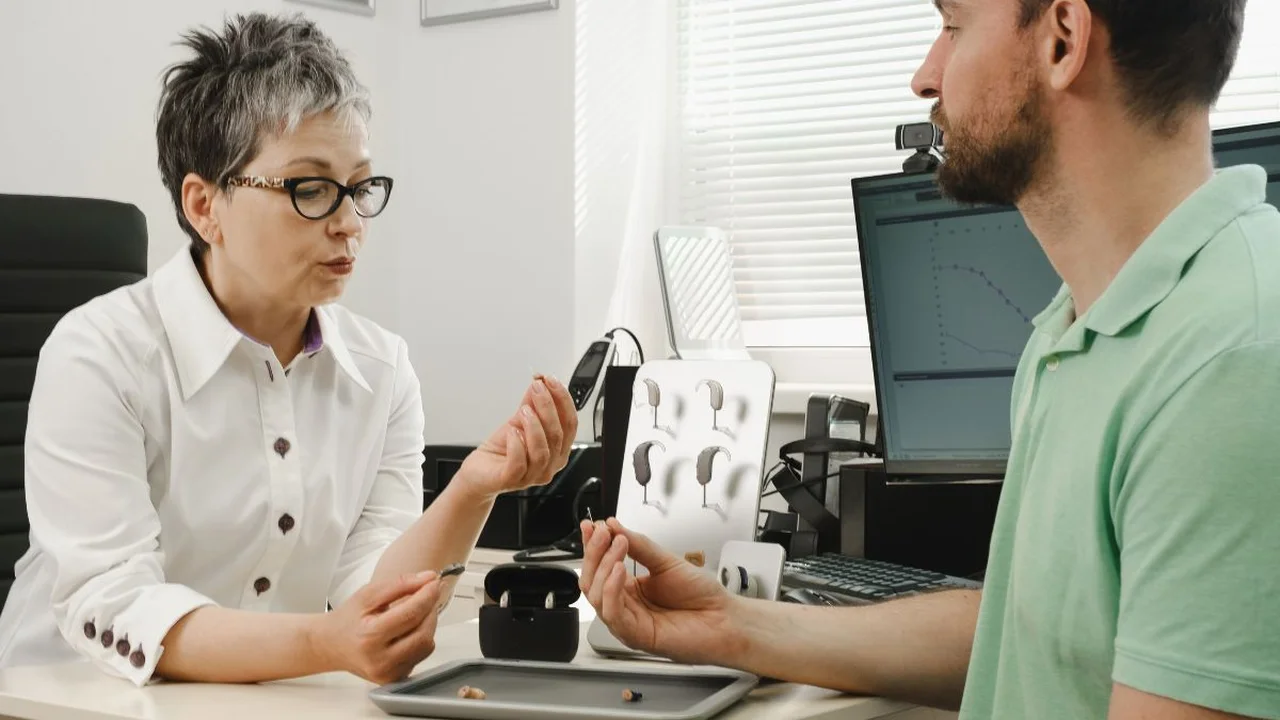
Discover how hearing aids can boost workplace productivity. Improve communication, focus, and participation in meetings and daily tasks.
Hearing Aids and Workplace Productivity
Let's face it, the modern workplace is a dynamic, often noisy, and highly communicative environment. From bustling open-plan offices to virtual meetings filled with overlapping voices, clear communication is absolutely essential for getting things done. If you're experiencing hearing loss, even a mild one, you might find yourself struggling to keep up, leading to frustration, missed opportunities, and a dip in your overall productivity. But here's the good news: hearing aids aren't just about hearing better; they're powerful tools that can significantly boost your workplace productivity, enhance your focus, and ensure you're a fully engaged and contributing member of your team. Let's dive into how these small devices can make a huge difference in your professional life.
The Silent Struggle: How Untreated Hearing Loss Impacts Your Career
Before we talk about the solutions, it's important to understand the challenges. Untreated hearing loss in the workplace can manifest in numerous ways, often subtly at first, but with cumulative negative effects. You might find yourself:
- Constantly asking colleagues to repeat themselves, which can be embarrassing or make you feel less competent.
- Struggling to follow conversations in meetings, especially with multiple speakers or background noise, leading to missed information or misunderstandings.
- Feeling exhausted by the end of the day from the sheer effort of trying to hear and comprehend. This 'listening fatigue' can reduce your cognitive resources for actual work tasks.
- Avoiding social interactions or team lunches because you dread the communication challenges, potentially leading to feelings of isolation.
- Missing important phone calls or struggling with conference calls, which are now more prevalent than ever.
- Making errors or needing more time to complete tasks because you misheard instructions or critical details.
- Feeling less confident in expressing your ideas or participating actively in discussions.
These issues don't just affect your personal well-being; they can directly impact your career progression, your relationships with colleagues, and your overall job satisfaction. The good news is, hearing aids are designed to tackle these very problems head-on.
Enhanced Communication and Collaboration with Hearing Aids
One of the most immediate and profound benefits of wearing hearing aids in the workplace is the dramatic improvement in communication. Imagine being able to:
- Participate actively in meetings: Modern hearing aids come with advanced features like directional microphones and noise reduction, which can focus on speech coming from the front while minimizing distracting background chatter. This means you can follow discussions, contribute your ideas, and understand decisions without constant strain.
- Engage in clear one-on-one conversations: Whether it's a quick chat with a colleague at their desk or a more formal discussion with your manager, hearing aids ensure you catch every word, nuance, and tone, fostering stronger professional relationships.
- Master phone and video calls: Many contemporary hearing aids offer direct streaming capabilities, allowing audio from your smartphone or computer to be sent directly into your hearing aids. This transforms phone calls and virtual meetings into crystal-clear experiences, eliminating the struggle with speakerphones or headphones.
- Understand instructions and feedback: Misinterpreting instructions can lead to wasted time and rework. With hearing aids, you'll hear instructions clearly the first time, reducing errors and increasing efficiency. Similarly, you'll be able to fully grasp feedback, leading to better performance and growth.
Improved Focus and Reduced Listening Fatigue in the Office
The effort involved in trying to hear when you have hearing loss is immense. This constant mental strain, known as listening fatigue, can be as draining as physical exertion. When your brain is working overtime just to process sound, it has fewer resources left for critical thinking, problem-solving, and creative tasks. Hearing aids alleviate this burden by:
- Reducing cognitive load: By amplifying and clarifying sounds, hearing aids make it easier for your brain to process auditory information. This frees up cognitive resources, allowing you to focus more effectively on your actual work tasks rather than on the act of hearing.
- Enhancing concentration: With less effort spent on hearing, your concentration levels naturally improve. You'll find it easier to stay on task, absorb new information, and maintain focus throughout the day, even in busy environments.
- Minimizing distractions: Advanced noise reduction features in hearing aids don't just make speech clearer; they also actively suppress distracting background noises like air conditioning hums, keyboard clicks, or distant conversations, creating a more conducive listening environment.
- Boosting energy levels: By reducing listening fatigue, hearing aids help you conserve energy. You'll feel less drained at the end of the workday, leaving you with more energy for personal life and reducing the likelihood of burnout.
Specific Hearing Aid Features for the Modern Professional
Not all hearing aids are created equal, especially when it comes to workplace performance. Here are some key features to look for that can significantly enhance your productivity:
- Directional Microphones: These are crucial for focusing on speech from a specific direction (e.g., a speaker in a meeting) while reducing noise from other directions.
- Advanced Noise Reduction: Look for hearing aids with sophisticated algorithms that can differentiate between speech and various types of background noise, effectively suppressing the latter.
- Bluetooth Connectivity and Direct Streaming: Essential for seamless connection to smartphones, laptops, and other devices for phone calls, video conferences, and multimedia streaming.
- Telecoil (T-coil): This feature allows hearing aids to connect wirelessly to 'looped' environments (like some conference rooms, theaters, or public spaces) and compatible landline phones, providing a clear audio signal directly to your ears.
- Remote Microphone Accessories: Devices like Phonak PartnerMic or Roger On, or Starkey Table Mic, can be placed on a table in a meeting or worn by a speaker, transmitting their voice directly to your hearing aids, significantly improving clarity in challenging acoustic environments.
- Rechargeable Batteries: For convenience and reliability, rechargeable hearing aids ensure you're always powered up for a full workday without worrying about carrying spare batteries.
- Customizable Programs: The ability to switch between different listening programs (e.g., 'office,' 'meeting,' 'noisy environment') via a smartphone app or a button on the hearing aid allows you to optimize performance for various workplace scenarios.
Recommended Hearing Aids for Workplace Productivity and Their Use Cases
Let's look at some specific models and brands that excel in workplace environments, considering their features, typical use cases, and general price ranges. Please note that prices are approximate and can vary significantly based on technology level, provider, and location.
1. Phonak Lumity Series (e.g., Lumity L90, L70)
Key Features: Phonak is renowned for its 'AutoSense OS' which automatically adapts to different sound environments. The Lumity series boasts enhanced speech understanding in noise, universal Bluetooth connectivity (connecting to virtually any Bluetooth-enabled device), and excellent remote microphone accessories like the Roger On. It also offers rechargeable options.
Use Cases: Ideal for professionals who frequently attend meetings (both in-person and virtual), make numerous phone calls, and work in varied acoustic environments. The Roger On accessory is a game-changer for large conference rooms or noisy team discussions.
Comparison: Stands out for its robust connectivity and superior performance in complex listening situations, especially with its Roger accessories. It's often considered a top choice for active professionals.
Estimated Price Range: $2,500 - $7,000 per hearing aid (depending on technology level and provider).
2. Oticon More Series (e.g., More 1, More 2)
Key Features: Oticon More uses a 'Deep Neural Network' (DNN) to process sound, giving the brain access to a more complete soundscape rather than just focusing on speech from the front. This 'BrainHearing' approach aims to reduce listening effort. It offers direct streaming from iPhone and select Android devices, and rechargeable options.
Use Cases: Excellent for professionals who value a natural sound experience and need to be aware of their surroundings while still understanding speech. Good for open-plan offices where you need to hear colleagues around you, not just directly in front.
Comparison: Differs from traditional directional hearing aids by providing a fuller sound picture, which can be beneficial for situational awareness. May require a slightly longer adaptation period for some users.
Estimated Price Range: $2,000 - $6,500 per hearing aid.
3. ReSound OMNIA Series (e.g., OMNIA 9, OMNIA 7)
Key Features: ReSound OMNIA focuses on 'M&RIE' (Microphone & Receiver-In-Ear) technology, which uses microphones both on the hearing aid and inside the ear canal to leverage the ear's natural sound localization abilities. It offers excellent speech clarity in noise, direct streaming, and a comprehensive app for personalization. Rechargeable options are available.
Use Cases: Great for professionals who want a natural sound experience and struggle with understanding speech in noisy environments. The M&RIE design can be particularly helpful for localizing sounds in a busy office.
Comparison: Its M&RIE technology offers a unique approach to sound processing, aiming for a more natural listening experience. Strong app control for user customization.
Estimated Price Range: $2,200 - $6,800 per hearing aid.
4. Starkey Evolv AI Series (e.g., Evolv AI 2400, 2000)
Key Features: Starkey Evolv AI incorporates artificial intelligence for automatic adjustments and personalized sound. It boasts superior sound quality, excellent noise reduction, and features like 'Edge Mode' for on-demand clarity in challenging environments. It also offers health tracking features (though less relevant for productivity, still a nice bonus) and direct streaming.
Use Cases: Ideal for professionals who appreciate cutting-edge technology and want a hearing aid that intelligently adapts to their environment. The Edge Mode is perfect for sudden, unexpected noisy situations in the workplace.
Comparison: Its AI capabilities and health tracking set it apart. The sound quality is often praised, and the intelligent automation reduces the need for manual adjustments.
Estimated Price Range: $2,300 - $7,200 per hearing aid.
5. Widex Moment Series (e.g., Moment 440, 330)
Key Features: Widex Moment is known for its 'PureSound' technology, which aims to eliminate the processing delay often found in digital hearing aids, resulting in a more natural and immediate sound experience. It offers excellent sound quality, particularly for music, and good performance in noisy environments. Rechargeable options and direct streaming are available.
Use Cases: Professionals who prioritize natural sound and struggle with the artificial or 'tinny' sound sometimes associated with hearing aids. Also great for those who enjoy listening to music or podcasts during work breaks.
Comparison: Its PureSound technology is a unique selling point, offering a very natural sound. While excellent for overall sound quality, some other brands might have slightly more aggressive noise reduction for extremely challenging environments.
Estimated Price Range: $2,100 - $6,700 per hearing aid.
Maximizing Your Hearing Aids for Workplace Success
Getting hearing aids is the first step, but optimizing them for your specific workplace needs is key. Here's how you can get the most out of your devices:
- Work closely with your audiologist: This is paramount. Your audiologist can program your hearing aids with specific settings tailored to your work environment. Don't hesitate to discuss your daily challenges – noisy colleagues, frequent phone calls, large meeting rooms – so they can fine-tune your devices.
- Utilize remote microphones: If your workplace involves large meetings or presentations, invest in a compatible remote microphone accessory. These devices can dramatically improve speech clarity by picking up the speaker's voice directly and streaming it to your hearing aids.
- Leverage smartphone apps: Most modern hearing aids come with companion smartphone apps. These apps allow you to adjust volume, switch between programs (e.g., a 'meeting' program vs. a 'quiet office' program), and even fine-tune noise reduction settings on the fly.
- Communicate with colleagues: Don't be afraid to let your colleagues know you wear hearing aids. A simple explanation can foster understanding and encourage them to speak clearly or face you when talking.
- Take advantage of assistive listening devices (ALDs): Beyond remote microphones, consider other ALDs like amplified phone systems or personal FM systems if your job requires specific communication tools.
- Regular maintenance: Keep your hearing aids clean and well-maintained. Earwax buildup or moisture can impair performance, directly impacting your ability to hear effectively at work.
- Trial and error with programs: Experiment with different programs and settings in various work situations. What works best in a quiet office might not be ideal for a bustling cafeteria or a large conference call.
The Return on Investment: Why Hearing Aids Are Worth It for Your Career
While hearing aids represent a significant investment, the return on that investment, especially in a professional context, can be substantial. Consider the following:
- Increased earning potential: Studies have shown a direct correlation between untreated hearing loss and reduced income. By improving communication and productivity, hearing aids can help you maintain or even increase your earning potential.
- Career advancement: Being fully engaged, contributing effectively in meetings, and building strong professional relationships are all critical for career growth. Hearing aids empower you to do all of this.
- Reduced stress and fatigue: The mental toll of constantly straining to hear can be immense. Hearing aids alleviate this stress, leading to a more enjoyable and less exhausting workday.
- Enhanced confidence: When you can hear clearly, your confidence in social and professional interactions soars. You'll be more likely to speak up, share ideas, and take on new challenges.
- Improved job satisfaction: When you're performing well, communicating effectively, and feeling less stressed, your overall job satisfaction naturally increases.
Think of hearing aids not just as medical devices, but as essential professional tools, much like a good laptop or a reliable smartphone. They are an investment in your ability to perform at your best, to connect with your colleagues, and to thrive in your career. If you suspect you have hearing loss, don't let it hold you back. Schedule a hearing evaluation with an audiologist today and explore how modern hearing aid technology can transform your workplace experience and boost your productivity to new heights.
:max_bytes(150000):strip_icc()/277019-baked-pork-chops-with-cream-of-mushroom-soup-DDMFS-beauty-4x3-BG-7505-5762b731cf30447d9cbbbbbf387beafa.jpg)